Capture the load first.
Biofilter what remains.
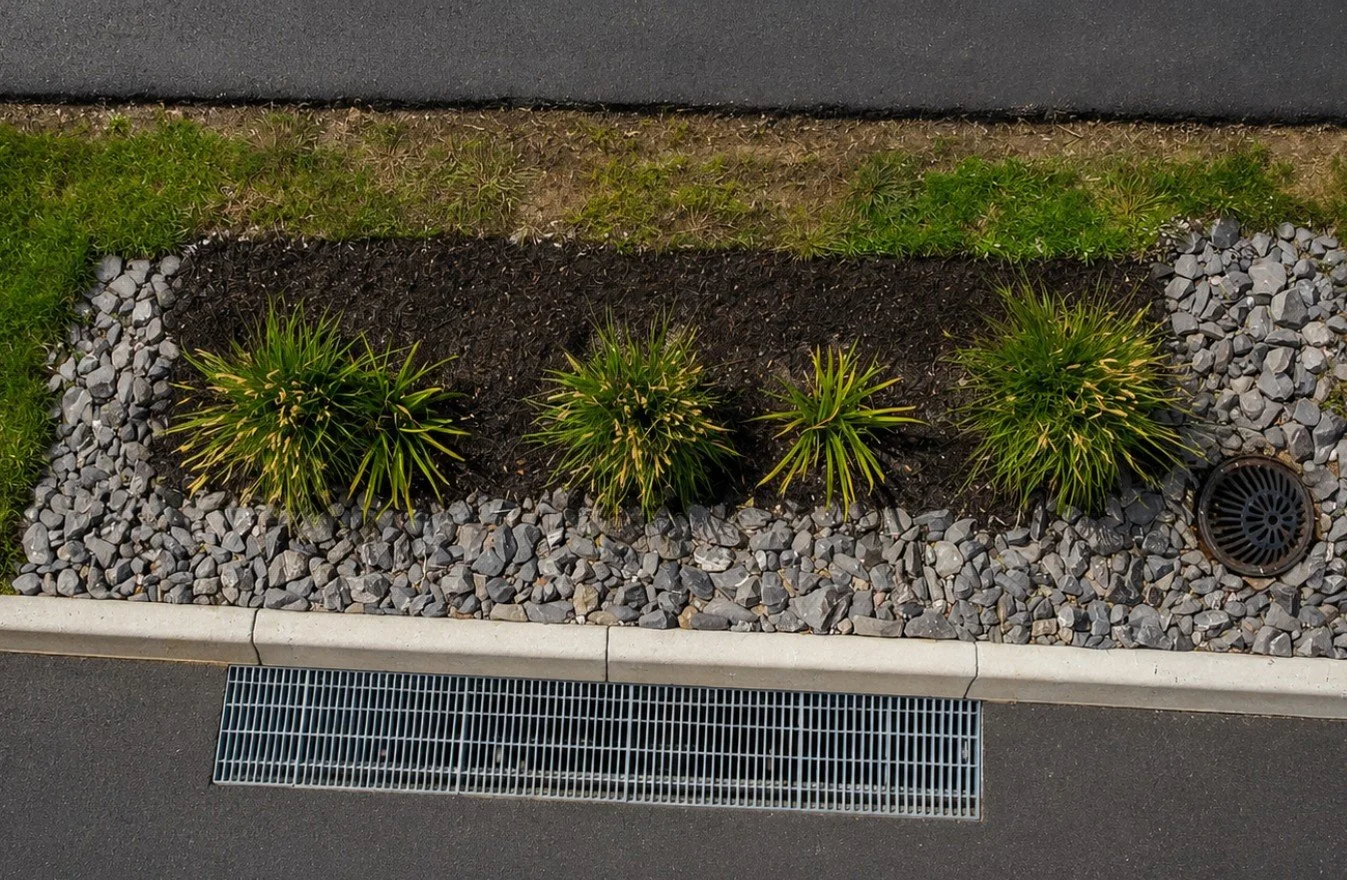
Kai Pono and FocalPoint® combine two complementary stormwater treatment stages: curb-line pretreatment upstream and high-performance modular biofiltration downstream.
Kai Pono intercepts trash, sediment, gross debris, and selected pollutants before runoff moves farther into the drainage network. FocalPoint® then receives a cleaner influent stream for engineered biofiltration in a compact landscaped footprint.
Let each system do the job it is best suited to perform.
The value of this treatment train is not simply placing two products on the same site. It is sequencing them so that upstream pretreatment reduces the gross-solids burden before runoff reaches downstream biofiltration. That relationship can support treatment performance, simplify maintenance access, and protect downstream system capacity.
From the street to engineered biofiltration.
The treatment sequence starts where runoff enters the drainage system. Kai Pono handles the first-stage burden at the curb. FocalPoint® follows with high-performance biofiltration downstream.
Accessible curb-line pretreatment
Kai Pono intercepts coarse sediment, gravel, trash, gross debris, and selected pollutants before they reach downstream infrastructure. Maintenance remains concentrated at an accessible street-level location.
Compact high-performance biofiltration
FocalPoint® receives a cleaner influent stream and uses engineered biofiltration media and a modular underdrain system to provide water-quality treatment within a compact landscaped footprint.
Protect downstream treatment from unnecessary loading.
By removing trash and heavier sediment before runoff reaches the biofiltration stage, Kai Pono can reduce the material that would otherwise accumulate on or within the downstream treatment system. FocalPoint® can then focus on the biofiltration function it was designed to provide.
High-performance biofiltration in a compact footprint.
FocalPoint® High Performance Modular Biofiltration is an engineered stormwater biofiltration system from Convergent Water Technologies designed to deliver high-rate water-quality treatment in a smaller footprint than conventional bioretention.
Designed to move water quickly through an engineered profile.
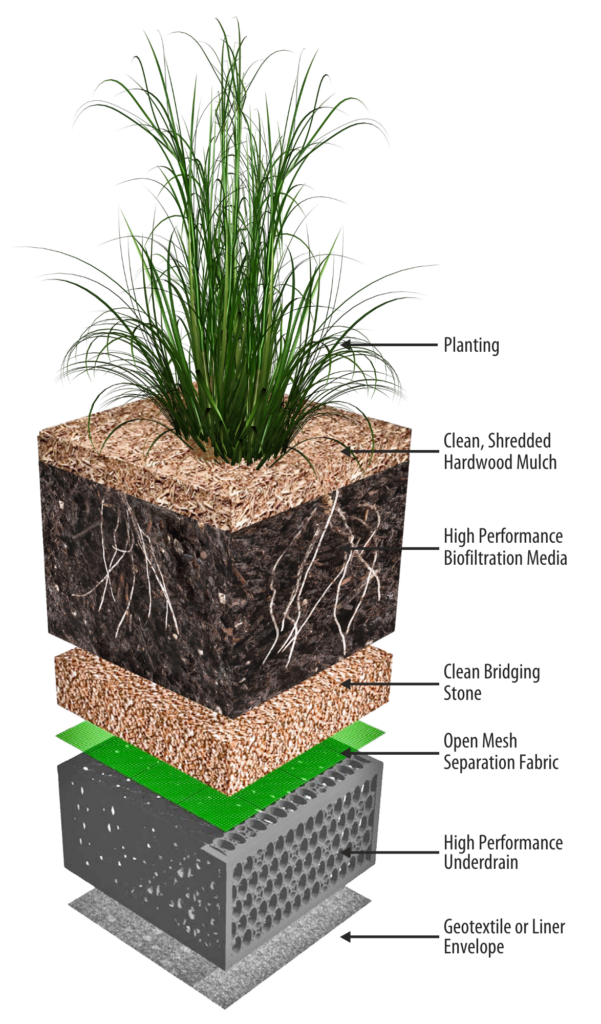
FocalPoint® combines high-performance biofiltration media with bridging layers and an open-cell modular underdrain. Its media is designed for very high hydraulic loading rates, allowing the treatment footprint to be significantly smaller than traditional bioretention while still maintaining a landscaped surface.
- High-performance engineered biofiltration media.
- Open-cell modular underdrain.
- Compatible with infiltration and storage strategies.
- Applicable to bioswales, bioretention areas, and stormwater planters.
- Compact footprint for constrained sites.
Biofiltration that becomes part of the landscape.
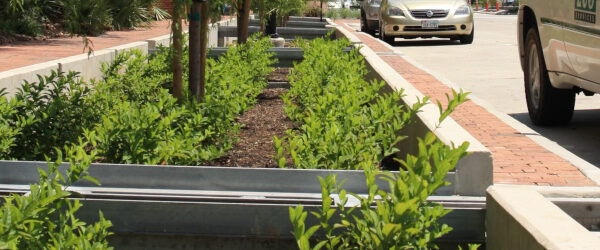
FocalPoint® can be integrated into streetscapes, roadway corridors, commercial developments, landscaped islands, and other green-infrastructure applications.
Two different jobs. One coordinated treatment train.
Kai Pono and FocalPoint® address different parts of the stormwater treatment problem. Used together, they create a staged approach that can improve maintainability, protect downstream treatment capacity, and give engineers more flexibility in how water-quality objectives are met.
Capture Gross Solids First
Kai Pono intercepts sediment, gravel, trash, and debris before those materials reach downstream biofiltration.
Keep First-Stage Maintenance Accessible
Routine sediment and trash removal remains at the curb instead of being pushed into a landscaped treatment area or buried downstream infrastructure.
Protect Biofiltration Capacity
Reducing upstream solids loading can help keep downstream treatment focused on the water-quality function it was designed to provide.
Use Site Area More Efficiently
FocalPoint® provides high-rate treatment in a compact footprint, giving designers more flexibility where conventional bioretention may require more space.
Integration starts with hydraulics, pollutants, and maintenance.
Both Kai Pono and FocalPoint® are modular technologies, but the combined treatment train should still be designed around the actual project. Routing, elevations, treatment objectives, bypass conditions, downstream storage, infiltration, and regulatory requirements determine the final configuration.
Drainage Area & Flow
Establish tributary area, design flow, storm criteria, and how runoff will move from Kai Pono into the downstream FocalPoint® system.
Pollutants of Concern
Define which pollutants should be intercepted upstream and which should be addressed through downstream biofiltration.
Elevation & Routing
Confirm available hydraulic head, inlet and outlet elevations, bypass conditions, and how water will physically move between treatment stages.
Maintenance Strategy
Establish how frequently Kai Pono will be serviced and how upstream pretreatment supports the long-term maintenance plan for FocalPoint®.
Pretreatment upstream. Biofiltration downstream.
The treatment train is strongest when each stage has a clear purpose. Kai Pono concentrates gross solids and accessible first-stage maintenance at the curb. FocalPoint® follows with compact engineered biofiltration. The complete design can then connect to infiltration, storage, reuse, or managed discharge depending on project needs.
A treatment train for sites where performance and footprint both matter.
Commercial Development
Use curb-line pretreatment upstream of landscaped biofiltration areas while preserving valuable site area.
Municipal Streetscapes
Intercept trash and sediment at the street before routing runoff into downstream green infrastructure.
Parking Lots
Treat runoff close to the source and protect downstream landscaped treatment areas from unnecessary gross-solids loading.
Constrained Urban Sites
Combine shallow curb-line pretreatment with compact high-rate biofiltration where available treatment area is limited.
Bring us the site. We’ll help evaluate the treatment train.
Share the drainage area, site grade, inlet configuration, pollutants of concern, available treatment area, downstream infrastructure, and project objectives. Kai Pono and Convergent can help evaluate where curb-line pretreatment and high-performance biofiltration fit within the project.
- Drainage / tributary area
- Design flow or storm criteria
- Site and pipe elevations
- Pollutants of concern
- Available treatment footprint
- Existing storm-drain configuration
- Infiltration / storage objectives
- Maintenance requirements