Stormwater treatment
works better together.
Kai Pono can serve as the first stage in a larger stormwater treatment train, intercepting trash, sediment, and targeted pollutants at the curb before runoff reaches downstream treatment, infiltration, storage, reuse, or discharge systems.
The objective is not to make one device solve every stormwater problem. It is to sequence technologies so each stage performs the job it is best suited to do, while improving access, reducing downstream loading, and creating a system that fits the actual site.
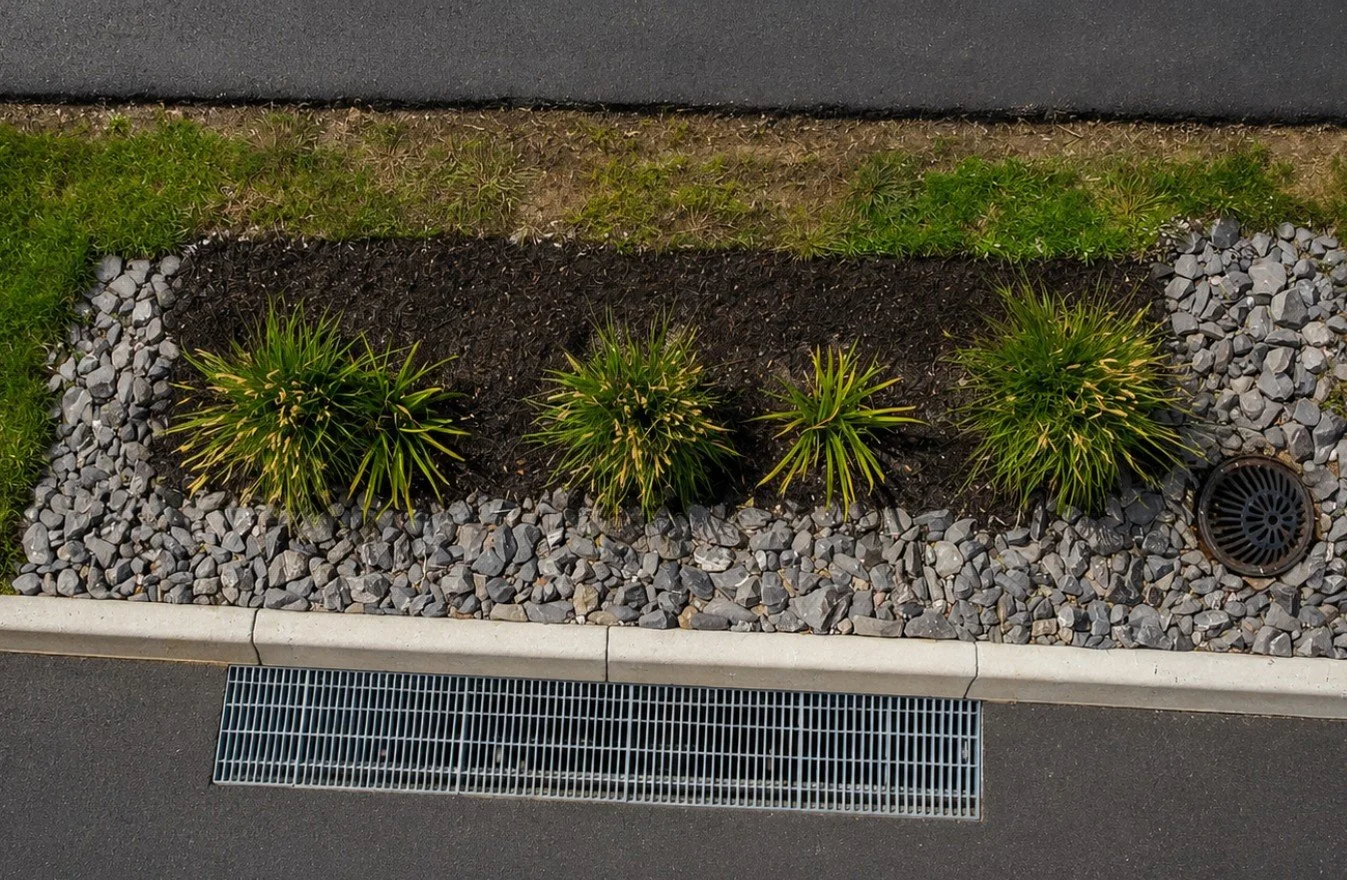
Different pollutants. Different site constraints. Different jobs to do.
Stormwater systems are often asked to capture trash, remove sediment, reduce pollutant concentrations, manage flow, infiltrate water, protect receiving waters, preserve developable area, and remain maintainable for decades. A treatment train lets the project team divide those responsibilities across complementary technologies instead of forcing every requirement into a single structure.
Put each treatment stage where it can do the most good.
Kai Pono is positioned at the curb, where runoff first enters the drainage system. That makes it a logical upstream stage for projects that need additional downstream water-quality, infiltration, storage, detention, reuse, or polishing functions.
Capture the heavy load first
Intercept coarse sediment, gravel, trash, and gross debris before those materials migrate into downstream structures, media beds, storage systems, or conveyance.
Target the pollutants that remain
Use project-specific filtration, biofiltration, adsorption, separation, infiltration, or other treatment mechanisms for finer or dissolved pollutants after the gross-solids burden has been reduced.
Manage water where the site needs it
Route treated runoff to infiltration, detention, storage, reuse, discharge, or a final polishing stage based on project hydraulics and regulatory requirements.
Keep first-stage maintenance at the street.
Kai Pono concentrates the material that is easiest to capture early in the treatment process at a location designed for direct surface access. That can reduce the amount of sediment and trash reaching downstream systems and shift routine maintenance toward a visible, accessible curb-line device instead of deeper or more complex infrastructure.
Kai Pono is designed to work as part of a system.
Depending on the site, Kai Pono can be evaluated as upstream pretreatment for a wide range of stormwater technologies. Final compatibility, hydraulic routing, sizing, treatment performance, and regulatory acceptance should be established by the project engineer.
Biofiltration & Bioretention
Reduce sediment and trash loading before runoff enters vegetated media, bioswales, planters, or other biofiltration systems.
Infiltration Systems
Intercept gross solids before runoff reaches infiltration beds, chambers, trenches, or other subsurface systems where sediment can consume storage or infiltration capacity.
Underground Detention & Storage
Keep sediment and trash upstream of tanks, vaults, modular storage systems, and other buried infrastructure where cleanout can be more difficult and expensive.
Water Reuse
Use curb-line pretreatment as an early stage before storage and project-specific treatment intended for irrigation, non-potable reuse, or other approved applications.
Filtration Media
Pair Kai Pono with project-specific media selected for metals, hydrocarbons, nutrients, microplastics, or other pollutants of concern.
Green Infrastructure
Combine street-level pretreatment with landscaped stormwater measures while keeping trash and coarse sediment concentrated at the curb.
Distributed Treatment
Use multiple Kai Pono units across a site to intercept runoff near its source before routing flow toward centralized downstream infrastructure.
Other Stormwater Technologies
If another technology benefits from cleaner influent, accessible pretreatment, or reduced gross-solids loading, there may be an opportunity to integrate it with Kai Pono.
Let’s see how the pieces can work together.
Kai Pono is interested in working with manufacturers, media suppliers, treatment-system providers, monitoring companies, and other stormwater technology partners whose products can complement curb-line pretreatment. If your solution may fit into a treatment train with Kai Pono, contact us to discuss the application.
Kai Pono + FocalPoint®
One especially complementary treatment train pairs Kai Pono’s curb-line pretreatment with FocalPoint® High Performance Modular Biofiltration from Convergent Water Technologies.
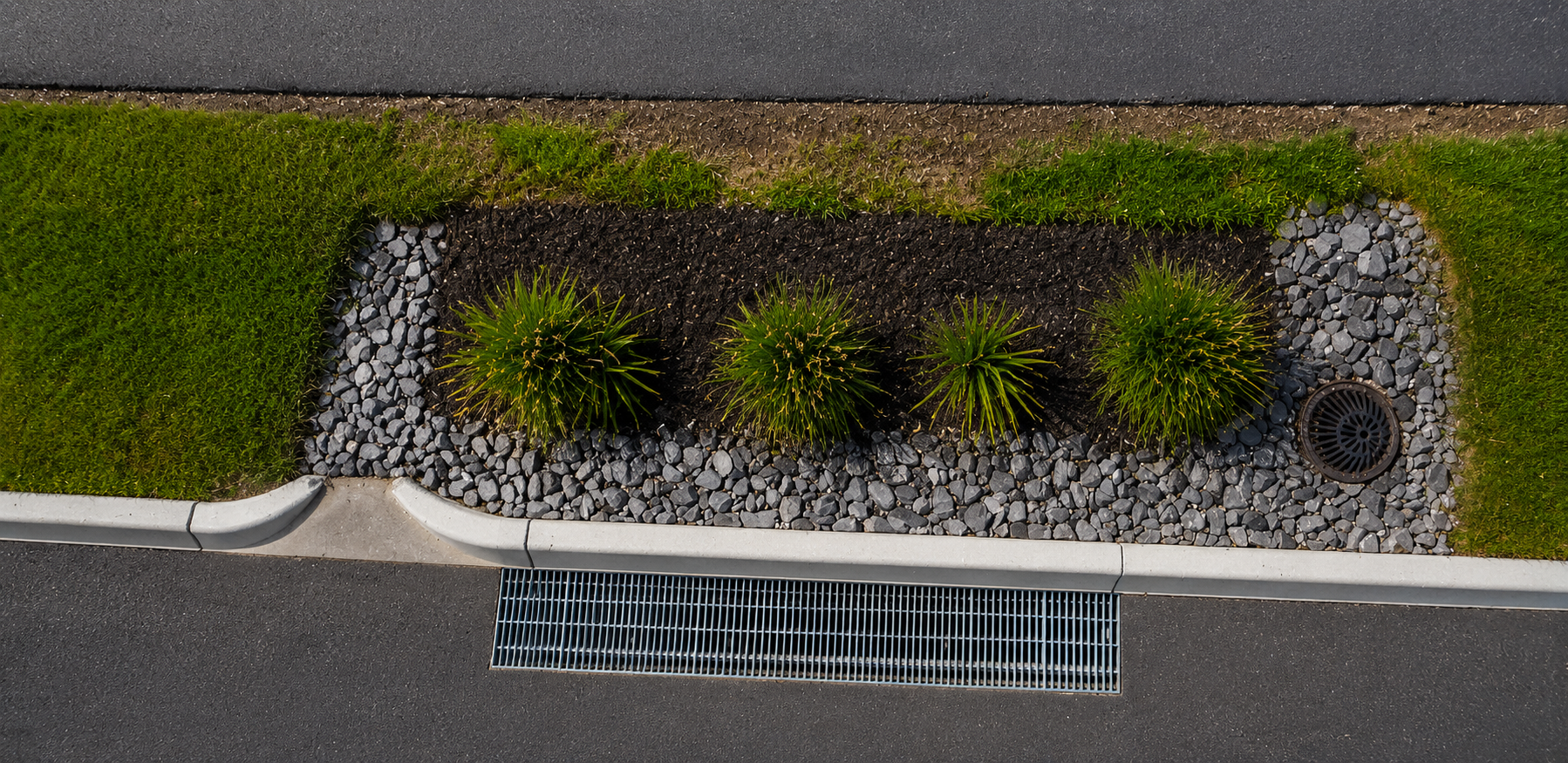
Pretreatment at the curb. Biofiltration downstream.
Kai Pono intercepts trash, sediment, gross debris, and selected pollutants before runoff moves farther into the drainage network. Downstream, FocalPoint® provides engineered biofiltration within a compact landscaped footprint.
The relationship is straightforward: Kai Pono reduces the first-stage solids and debris burden where maintenance is easy to access, while FocalPoint handles the downstream biofiltration function. Together, the systems can create a multi-stage treatment train designed around water quality, site constraints, and long-term maintenance.
The right treatment train starts with the project conditions.
Treatment trains are not one-size-fits-all. The right combination depends on hydraulics, pollutant loading, treatment objectives, available area, elevation, downstream infrastructure, and how the system will be maintained over time.
Drainage Area & Flow
Establish tributary area, design flow, storm criteria, and how runoff will move from Kai Pono into the next treatment stage.
Pollutants of Concern
Identify which pollutants should be captured upstream and which require additional downstream treatment.
Elevation & Routing
Confirm available hydraulic head, inlet and outlet elevations, bypass conditions, and the physical relationship between treatment components.
Maintenance Strategy
Determine where captured material should be removed, how frequently systems will be serviced, and how upstream pretreatment can protect downstream assets.
Solve the treatment problem, not just the product specification.
Kai Pono can be one component within a broader stormwater strategy. The objective is to determine which treatment stages belong upstream, which belong downstream, and how the complete system can deliver the required performance while remaining practical to install, inspect, and maintain.
Bring us the site. We’ll help explore the possibilities.
Share the drainage area, site grade, inlet configuration, pollutants of concern, available treatment area, downstream infrastructure, and project objectives. Kai Pono can help evaluate where curb-line pretreatment fits and what additional treatment stages may make sense.
- Drainage / tributary area
- Design flow or storm criteria
- Site and pipe elevations
- Pollutants of concern
- Available treatment footprint
- Existing storm-drain configuration
- Downstream BMPs or storage
- Maintenance requirements